EnviroCure®: What Under 1 ppm Styrene Actually Means
Styrene, Odor, and the Neighborhood: What the EnviroCure Patent Covers
United Felts holds a U.S. patent on a CIPP liner engineered to hold styrene emissions below 1 part per million. Here is the mechanism, and why it matters most to the people who live on the job.
Anyone who has lined a sewer in a residential street knows the phone calls. Styrene has a detection threshold far below anything of consequence, which means residents smell a CIPP installation long before there is anything to be concerned about and a smell that arrives with no explanation is, reasonably enough, treated as a problem.
EnviroCure®-Felt was engineered against that. In February 2026, United Felts was issued U.S. Patent 12,467,573 covering a styrene-impermeable polymer barrier that encapsulates styrene within the resin. The liner holds emissions below 1 part per million during installation, and reduces odor accordingly.
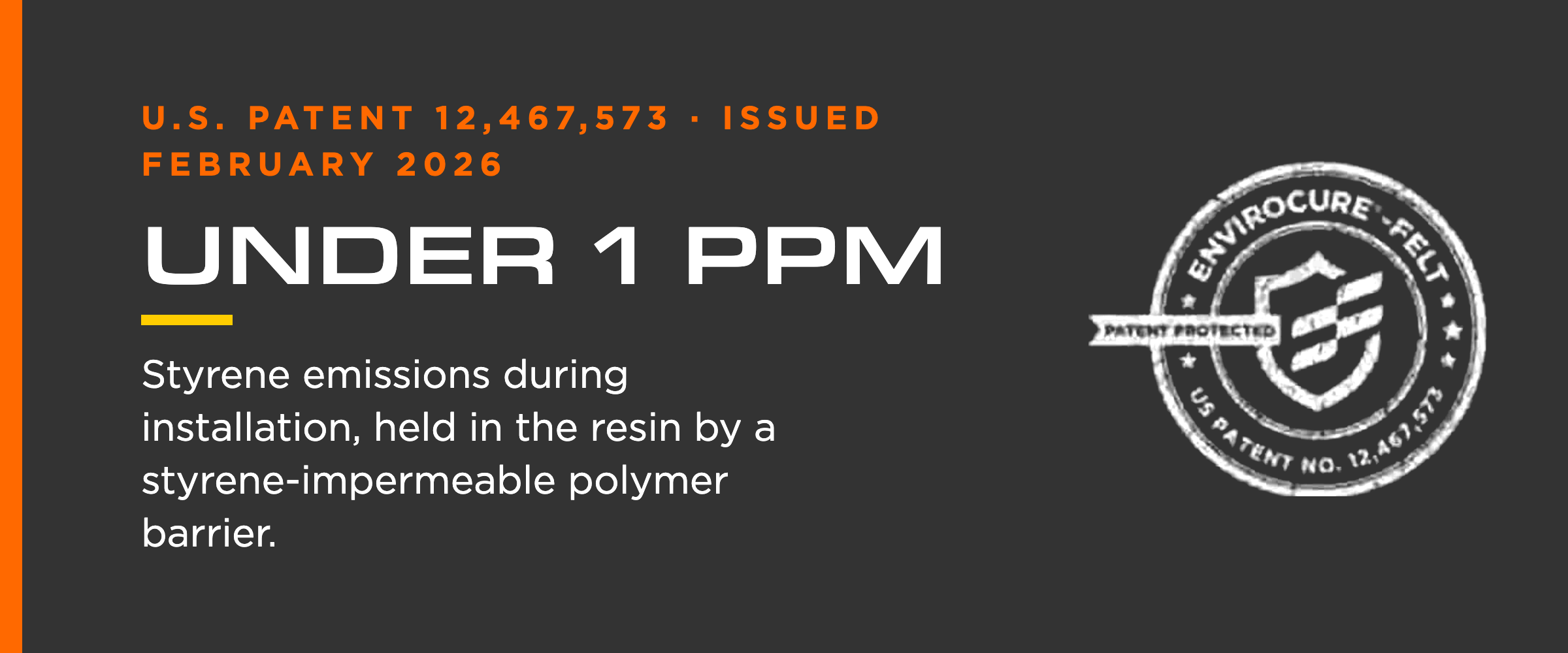
The patented claim, in one figure.
Two things about that are worth highlighting.
The first is that it is a barrier, not a substitute chemistry. The resin system is conventional; the patent is on containing it. That distinction matters, because it means the performance characteristics contractors and engineers already specify are unchanged. As Matt Timberlake, President of United Felts, put it when the patent was issued: EnviroCure-Felt is engineered to install just like traditional CIPP liners, using the same equipment and methods crews already know. There is no new process to learn and no new equipment to buy.
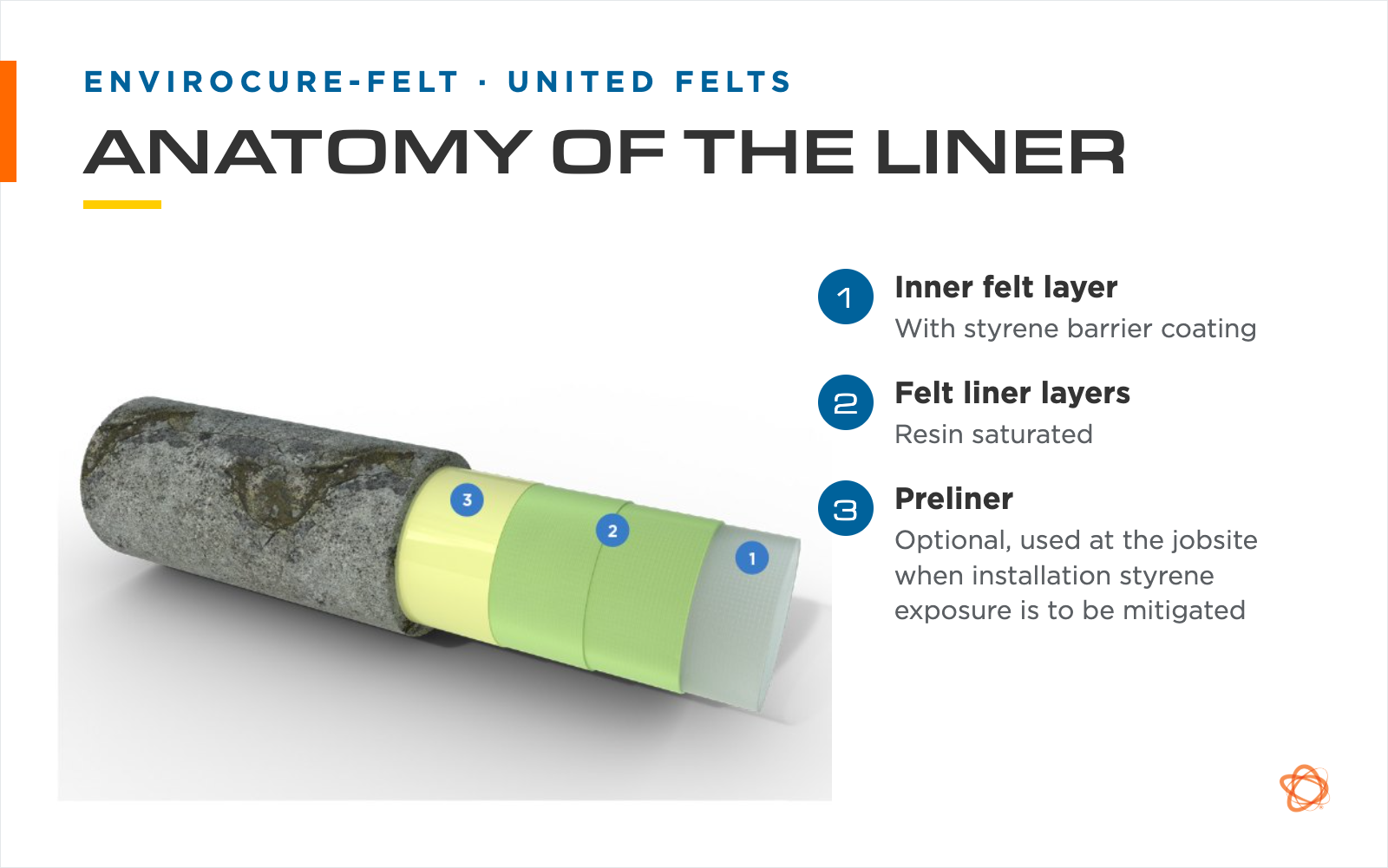
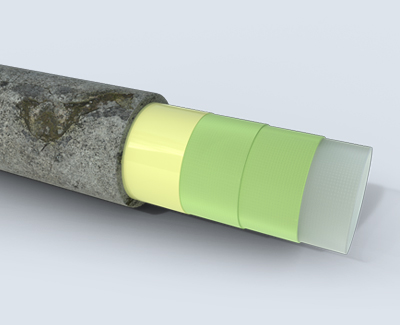
Overlapping layers inside the host pipe. The barrier coating on the inner felt layer is what keeps styrene in the resin.
The second is where the benefit actually resonates loudest. Sub-1 ppm is an environmental figure, but the people who experience it are the residents on the street, the school two doors down, and the businesses that would otherwise field a day of complaints. Rehabilitation work in dense residential areas is often constrained less by engineering than by tolerance; how much disruption a neighborhood will absorb before a project becomes politically difficult. A liner that installs without announcing itself (even the slightest) changes that tipping point.
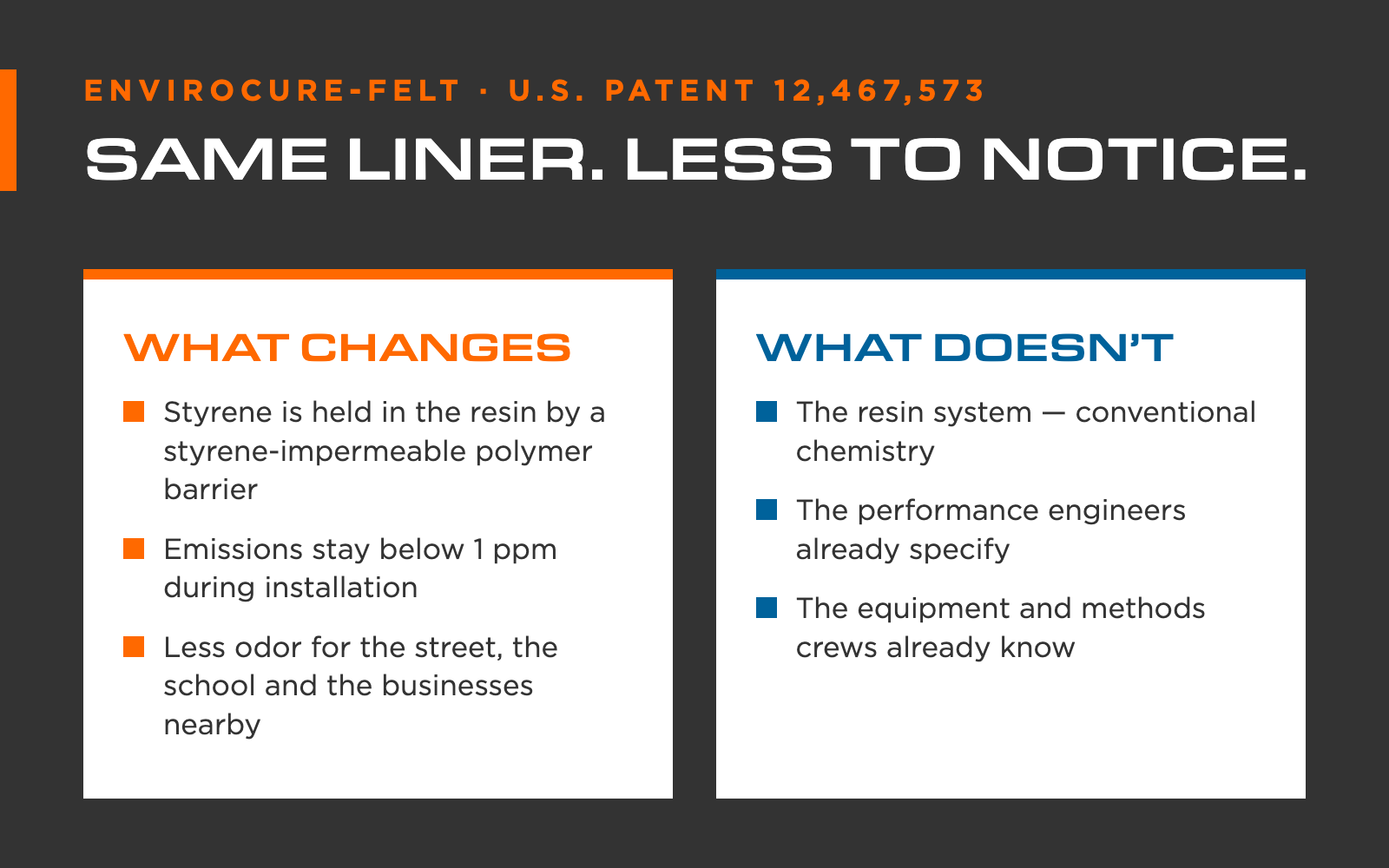
The patent is on containing the resin, not replacing it. What the neighborhood notices changes; what the specification says does not.
Mike Vellano described the patent as reflecting decades of expertise applied to evolving regulatory and safety challenges, which is the honest truth: the regulatory environment around styrene has tightened steadily, and it will continue to. Products that were specified comfortably a decade ago face more scrutiny now and Vortex is and will continue to be part of the solution.
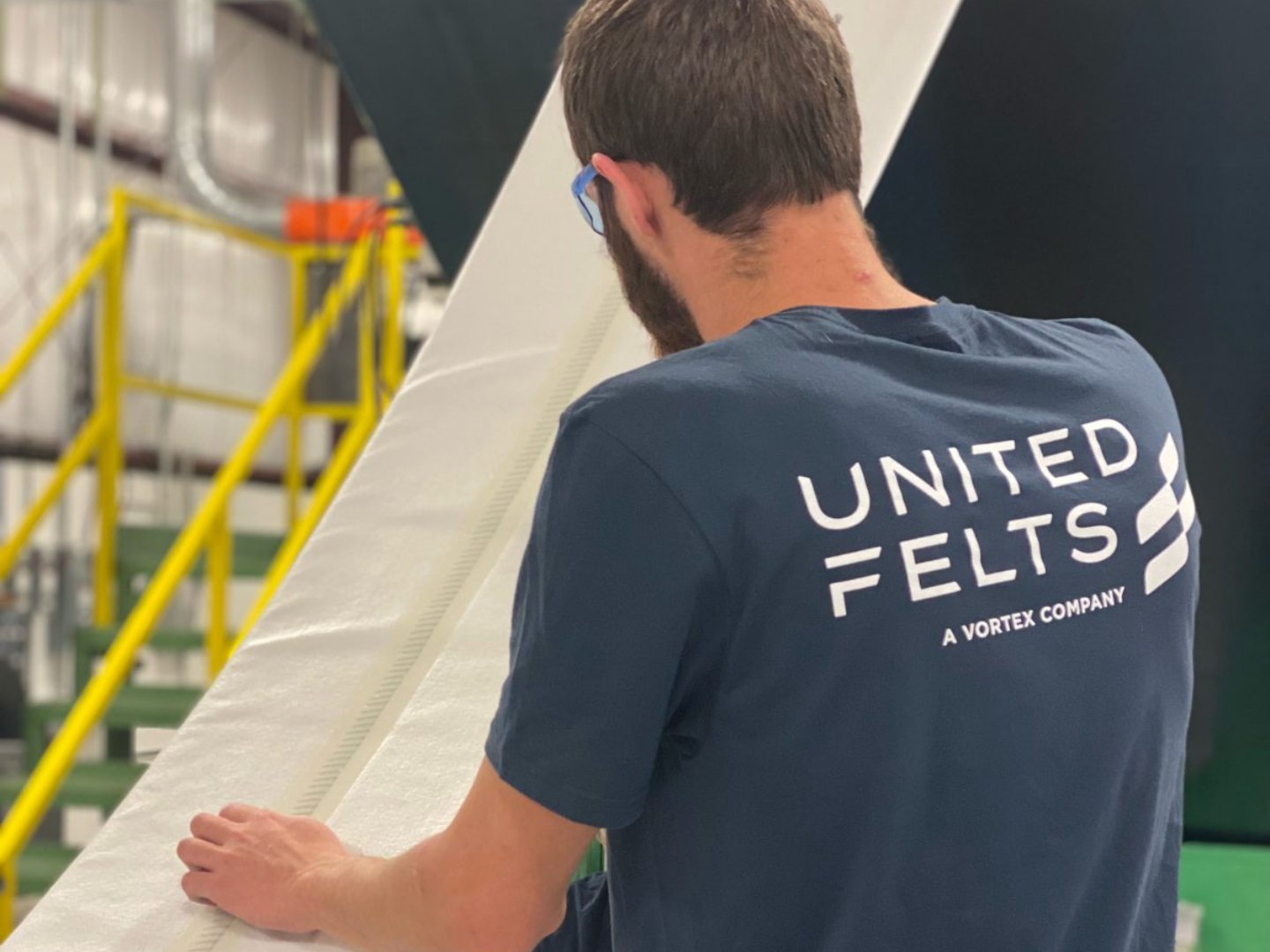
Liner felt in production at United Felts. Decades of expertise, applied to a tightening regulatory environment.
For a municipal owner writing a specification, the practical question is narrower than the science: can this line be rehabilitated without generating a week of resident complaints, and is the claim backed by anything more than a supplier’s word? In this case it is backed by a patent, which is a matter of public record.
Learn More About EnviroCure Technology